HOW TO WASH GOALKEEPER GLOVES PROPERLY
Complete Care Guide to Keep Your Gloves Grippy
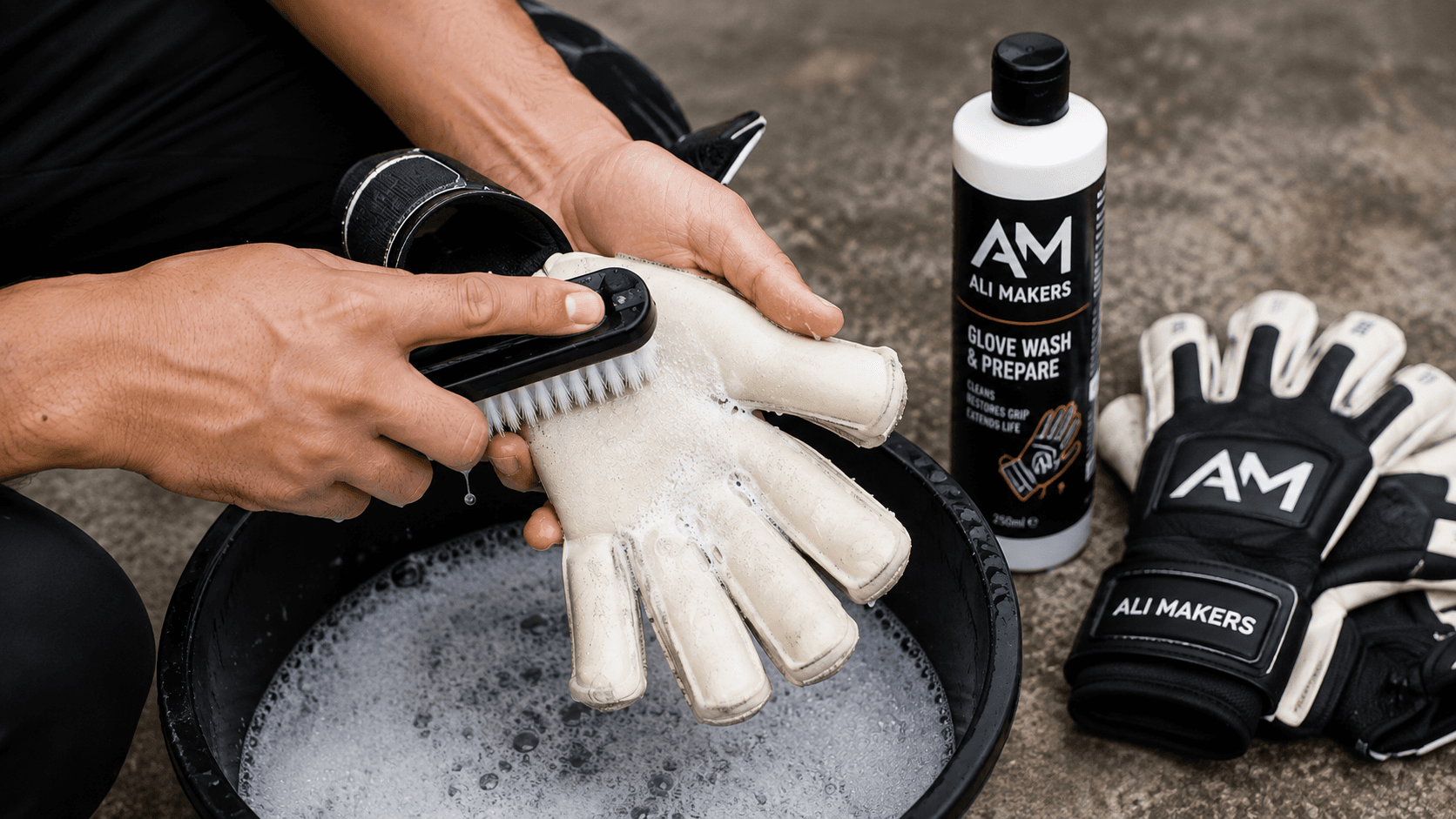
How to Wash Goalkeeper Gloves Properly: Complete Care Guide to Keep Your Gloves Grippy
Goalkeeper gloves are one of the most important pieces of equipment for any goalkeeper. During training and matches, the palms are exposed to mud, grass, sweat, dust and other debris that can gradually affect the latex and reduce grip.
Cleaning your goalkeeper gloves correctly helps remove this buildup and can help maintain their performance and condition. However, goalkeeper gloves should not be treated like ordinary sportswear. High-performance latex requires careful washing, drying and storage.
In this guide, we explain how to wash goalkeeper gloves, how often to clean them, how to dry them correctly, what to avoid and how to store them properly.
Why Is It Important to Wash Goalkeeper Gloves?
During every session, goalkeeper gloves collect dirt, sweat, grass and moisture. When this material is allowed to remain on the latex, it can affect the glove's grip and contribute to premature wear.
Regular cleaning removes dirt from the palm and helps keep the latex in better condition. Many goalkeeper equipment guides recommend cleaning gloves after use, particularly when they have become heavily soiled.
A simple cleaning routine can therefore help you get better use from your gloves.
What Do You Need to Wash Goalkeeper Gloves?
You do not need complicated equipment.
For a basic cleaning routine, you can use:
Lukewarm water
A goalkeeper glove cleaning solution or suitable mild cleaner
A clean towel
A sink, bowl or clean container
Avoid harsh chemicals, bleach and aggressive cleaning products because they can damage the materials and latex.
How to Wash Goalkeeper Gloves Step by Step
Step 1: Remove Loose Dirt
Start by removing loose grass, mud and other debris from the gloves.
Do this gently rather than aggressively scraping the latex palm.
If your gloves are covered in dried mud, allow lukewarm water to soften the dirt before attempting to remove it.
Step 2: Wet the Gloves With Lukewarm Water
Use lukewarm water to completely wet the gloves.
Avoid very hot water. Excessive heat can damage goalkeeper glove materials and latex. Several goalkeeper care guides recommend using lukewarm water and avoiding high temperatures.
Step 3: Clean the Latex Palm Gently
Apply a small amount of goalkeeper glove wash or an appropriate mild cleaning solution.
Gently massage the palm with your fingers to loosen dirt.
Do not aggressively scrub the latex with a stiff brush or abrasive material.
The goal is to remove the dirt without unnecessarily damaging the delicate palm surface.
Step 4: Rinse Thoroughly
Rinse the gloves under clean lukewarm water until the dirt and cleaning solution have been removed.
Make sure there is no remaining cleaner on the latex.
Step 5: Remove Excess Water
Do not twist or wring goalkeeper gloves.
Instead, gently press the gloves to remove excess water. You can also use a clean towel to absorb moisture without aggressively rubbing the palm.
Step 6: Let the Gloves Dry Naturally
This is one of the most important steps.
Allow the gloves to air-dry naturally in a cool, well-ventilated area.
Avoid:
Direct sunlight
Radiators
Heaters
Hair dryers
Tumble dryers
Other direct heat sources
High heat can cause latex to become brittle and can shorten the life of goalkeeper gloves.
Can You Put Goalkeeper Gloves in a Washing Machine?
The safest approach for performance goalkeeper gloves is hand washing.
Goalkeeper glove manufacturers and care guides commonly recommend washing gloves by hand rather than exposing them to the mechanical agitation and heat associated with ordinary washing.
Your goalkeeper gloves contain materials specifically designed for grip and flexibility, so gentle hand washing is a better way to control the cleaning process.
How Often Should You Wash Goalkeeper Gloves?
A good habit is to clean your gloves after every match or training session, especially when they are dirty or muddy.
If the gloves are left dirty inside a football bag, the dirt and moisture remain in contact with the latex and can contribute to deterioration.
At minimum, rinse the gloves after use and clean them more thoroughly when necessary.
Should You Wash New Goalkeeper Gloves Before Using Them?
Many goalkeeper glove care guides recommend rinsing or pre-washing new gloves before their first use.
This can help remove manufacturing residue from the latex and prepare the palm for use. Always follow the specific care instructions provided by the manufacturer of your gloves.
Should Goalkeeper Gloves Be Wet During a Match?
Goalkeeper latex generally performs well when it is slightly damp rather than completely dry.
For this reason, many goalkeeper care guides recommend lightly moistening the latex palm with clean water before or during play when conditions require it.
However, the gloves do not need to be completely soaked. Lightly dampening the palm is usually sufficient.
How Should You Store Goalkeeper Gloves?
Once the gloves have dried naturally, store them in a clean, dry and protected environment.
Avoid leaving them:
In direct sunlight
Near a heater
In a hot car
Wet inside a closed football bag
Under heavy equipment
A goalkeeper glove bag can provide additional protection during transportation and storage.
Keeping the palms from unnecessary contact with abrasive objects can also help protect the latex.
7 Common Goalkeeper Glove Care Mistakes
1. Leaving Dirty Gloves in the Bag
One of the easiest mistakes to make is finishing training, putting the gloves in your bag and forgetting about them.
Clean them as soon as reasonably possible.
2. Using Hot Water
Hot water can damage sensitive glove materials.
Use lukewarm water instead.
3. Scrubbing Too Hard
Aggressive scrubbing can unnecessarily wear the latex.
Use your fingers and gentle movements.
4. Twisting or Wringing the Gloves
Never twist the gloves to remove water.
Gently press out the excess moisture instead.
5. Drying Them on a Radiator
Direct heat is one of the most common mistakes in goalkeeper glove care.
Let the gloves dry naturally instead.
6. Using Harsh Detergents
Avoid bleach, strong detergents, solvents and other harsh household chemicals.
A suitable goalkeeper glove cleaner is preferable.
7. Keeping the Palms Completely Dry During Play
Depending on the latex and conditions, slightly damp palms can help maintain grip performance.
Keep clean water available during training or matches when appropriate.
How Long Do Goalkeeper Gloves Last?
There is no universal lifespan for goalkeeper gloves.
Durability depends on several factors, including:
Type of latex
Frequency of use
Playing surface
Training versus match use
Goalkeeper technique
Cleaning and drying routine
Softer, high-performance match latex can wear faster than more durable training latex, particularly when used frequently on abrasive surfaces.
This is why many serious goalkeepers use a dedicated pair for matches and another pair for training.
How to Make Your Goalkeeper Gloves Last Longer
The best approach is simple:
Clean them after use.
Use lukewarm water.
Handle the latex gently.
Never twist or wring the gloves.
Dry them naturally.
Keep them away from direct heat and sunlight.
Store them properly once completely dry.
Following these habits can help you get more consistent performance and value from your goalkeeper gloves.
Frequently Asked Questions
Can I wash goalkeeper gloves with soap?
A goalkeeper-specific cleaning product is preferable. Avoid harsh detergents and chemicals. If using a mild alternative, make sure the product is suitable for the glove materials and rinse thoroughly.
Can I dry goalkeeper gloves with a hair dryer?
No. Direct heat can damage the latex. Allow the gloves to air-dry naturally.
Can goalkeeper gloves be washed after every game?
Yes. Cleaning gloves after use is a good maintenance habit, particularly when they are dirty or muddy.
Why do my goalkeeper gloves lose grip?
Dirt, sweat, improper cleaning, excessive abrasion and normal latex wear can all affect grip. Cleaning the gloves properly can help remove dirt that interferes with the latex surface.
Should I wet my goalkeeper gloves before playing?
Many goalkeeper care guides recommend lightly dampening latex palms because goalkeeper latex can perform well when slightly damp. Avoid completely soaking the gloves.
Final Thoughts
Goalkeeper gloves are performance equipment, and proper maintenance is just as important as choosing the right glove in the first place.
A few minutes of careful washing after training or a match can help remove dirt, maintain the condition of the latex and keep your gloves performing consistently.
Treat your goalkeeper gloves carefully, use the correct cleaning method and avoid heat, harsh chemicals and aggressive handling.
Looking for Quality Goalkeeper Gloves?
Ali Makers manufactures and supplies goalkeeper gloves for football brands, clubs, academies, retailers and wholesalers.
We offer a wide range of glove cuts, latex options, backhand constructions and customization possibilities for businesses looking for custom goalkeeper gloves and wholesale goalkeeper glove manufacturing.
Explore our goalkeeper gloves collection or contact Ali Makers for custom and wholesale requirements.