How to Choose the Best Goalkeeper Gloves?
Complete Guide to Cut, Latex, Grip and Size.
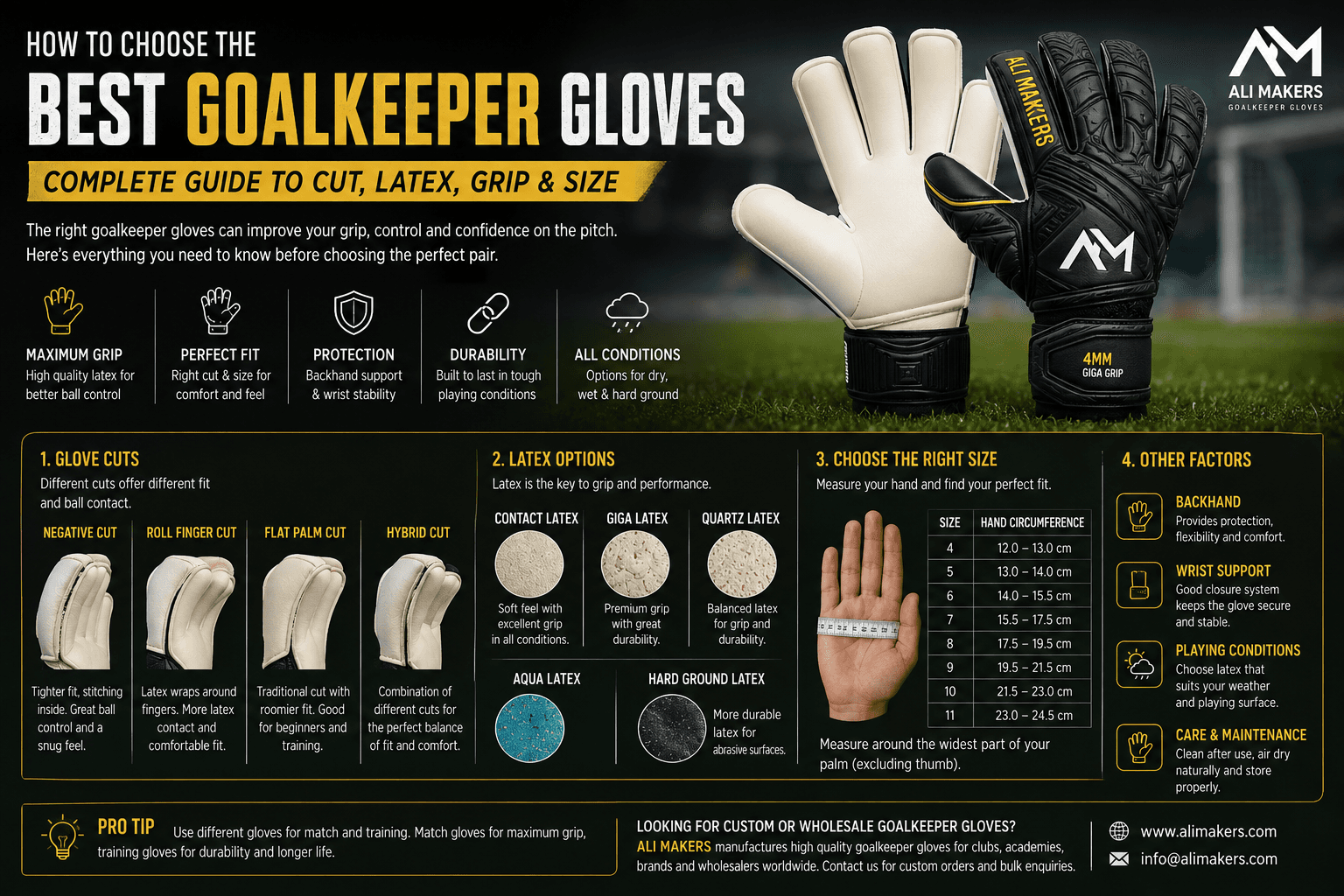
How to Choose the Best Goalkeeper Gloves:
Choosing the right goalkeeper gloves can make a noticeable difference in comfort, grip, control and confidence on the pitch. With so many different glove cuts, latex types, sizes and designs available, finding the right pair can be confusing.
Whether you are a beginner, an experienced goalkeeper, a football club or a buyer looking for goalkeeper gloves wholesale, understanding the key features of a glove will help you make a better decision.
In this guide, we will explain the most important factors to consider when choosing goalkeeper gloves, including glove cut, palm latex, grip, size, backhand, durability and playing conditions.
What Makes a Good Goalkeeper Glove?
A good goalkeeper glove should provide the right balance between:
Grip
Fit and comfort
Ball control
Durability
Protection
Flexibility
Performance in different weather conditions
There is no single goalkeeper glove that is perfect for everyone. The best choice depends on your playing style, experience, pitch conditions and personal preferences.
1. Choose the Right Goalkeeper Glove Cut
The cut determines how the glove fits around your fingers and palm. Different cuts provide different combinations of comfort, flexibility and contact with the ball.
Negative Cut
Negative cut goalkeeper gloves have their stitching on the inside of the glove. This creates a tighter and more streamlined fit around the fingers.
They are popular with goalkeepers who prefer:
A close-fitting glove
Better finger control
A snug, responsive feel
Greater contact with the ball
Negative cut gloves are particularly popular among modern goalkeepers who prefer a tight-fitting glove.
Roll Finger Cut
Roll finger gloves wrap the latex around the sides of the fingers. This provides a larger latex-to-ball contact area and a comfortable fit.
Roll finger gloves are often chosen by goalkeepers who prioritize:
Comfort
A natural fit
More latex contact
A traditional glove feel
Flat Palm Cut
The flat palm, also known as a traditional cut, is one of the classic goalkeeper glove designs.
It generally provides a roomier fit and can be a good option for goalkeepers who prefer more space inside the glove.
Hybrid Cut
Hybrid goalkeeper gloves combine features from different glove cuts, allowing manufacturers to create different combinations of fit, flexibility and latex contact.
Hybrid designs are useful for goalkeepers who want characteristics from more than one type of glove.
2. Understand Goalkeeper Glove Latex
The palm latex is one of the most important parts of a goalkeeper glove because it directly contacts the football.
Latex formulation can influence:
Grip
Ball control
Durability
Performance in wet conditions
Overall feel
Softer latex formulations generally focus more heavily on grip and feel, while harder and more durable formulations can be better suited to frequent training or abrasive surfaces.
4mm Goalkeeper Glove Latex
Many performance goalkeeper gloves use approximately 4mm palm latex. A thicker latex layer can provide cushioning and a comfortable feel when handling powerful shots.
Different latex formulations can produce very different performance characteristics, so thickness alone should not be used to judge the quality of a goalkeeper glove.
Contact Latex
Contact latex is generally designed to provide a soft feel and strong ball contact.
It can be particularly suitable for goalkeepers who prioritize grip and handling performance during matches.
Giga Latex
Giga latex formulations are designed to provide a balance of grip and performance and can be used in goalkeeper gloves intended for competitive play.
Quartz Latex
Quartz latex is another option used in goalkeeper glove palms, offering a balance between grip and durability depending on the formulation.
Aqua Latex
Aqua latex is designed for wet-weather performance. For goalkeepers who frequently play in rainy conditions, choosing a palm specifically designed for wet conditions can be beneficial.
Hard Ground Latex
Hard ground latex is designed with durability in mind and can be a practical option for training on abrasive or harder surfaces.
3. Consider Grip vs Durability
One of the most common mistakes when buying goalkeeper gloves is expecting maximum grip and maximum durability from the same palm in every situation.
In general, softer high-grip latex can be more vulnerable to abrasion, while more durable latex formulations may sacrifice some softness or grip.
Think about where you will use the gloves.
For matches: prioritize grip, feel and ball control.
For regular training: prioritize durability and value.
For hard or abrasive pitches: consider a more durable palm.
Many professional and serious amateur goalkeepers use different gloves for matches and training.
4. Choose the Correct Goalkeeper Glove Size
Getting the right size is essential.
A glove that is too tight can restrict movement and become uncomfortable, while an oversized glove can reduce control and create unnecessary movement inside the glove.
Your fingers should have enough room to move naturally without excessive empty space at the fingertips.
How to Measure Your Hand
Measure the circumference of your dominant hand around the widest part of the palm, excluding the thumb.
You can then compare the measurement with the manufacturer's size chart.
Because sizing can vary between manufacturers and glove designs, always check the specific size chart provided for the glove you are buying.
5. Think About the Backhand
The backhand is the upper part of the goalkeeper glove that protects the hand and fingers and contributes to punching performance.
Different materials can provide different levels of:
Flexibility
Breathability
Protection
Comfort
Weight
Common backhand materials include latex, neoprene, mesh and other performance fabrics.
A goalkeeper who plays in hot conditions may prefer a more breathable construction, while a goalkeeper looking for additional structure may prefer a more substantial backhand.
6. Consider the Closure and Wrist Support
The wrist closure helps secure the glove around the hand.
Common systems include elastic wristbands, Velcro-style closures and other adjustable constructions.
A good closure should keep the glove secure without becoming excessively tight.
For goalkeepers who prefer additional wrist stability, some gloves also incorporate extended wrist sections or supportive construction.
7. Match Your Gloves to the Playing Conditions
Your playing environment should influence your glove choice.
Dry Conditions
For dry conditions, a high-quality all-purpose latex can provide excellent grip and ball control.
Wet Conditions
Rain and moisture can significantly affect goalkeeper glove performance. Gloves designed for wet-weather conditions can provide better grip when the ball and surface are wet.
Artificial or Hard Surfaces
Artificial pitches and hard surfaces can increase abrasion. A more durable palm can be a better choice when gloves are exposed to frequent contact with abrasive surfaces.
8. Match Gloves vs Training Gloves
You do not necessarily need to use the same gloves for every training session and match.
Match Gloves
Match gloves usually prioritize:
Maximum grip
Soft latex
Ball feel
Comfort
Performance
Training Gloves
Training gloves often prioritize:
Durability
Value
Consistent performance
Resistance to abrasion
Using a dedicated training pair can help extend the life of your premium match gloves.
9. Goalkeeper Gloves for Different Playing Levels
Beginners
Beginners should focus on:
Comfortable fit
Suitable sizing
Good durability
Reliable grip
Good value
There is no need to buy the most expensive glove simply because you are starting out.
Competitive Players
Competitive players may want to pay closer attention to:
Latex formulation
Glove cut
Fit
Wet-weather performance
Backhand construction
Wrist support
Professional-Level Goalkeepers
At a higher level, personal preference becomes especially important. Professional goalkeepers may have very specific requirements regarding glove shape, cut, latex, finger fit and customization.
10. How to Take Care of Goalkeeper Gloves
Even the best goalkeeper gloves can deteriorate quickly without proper care.
After use:
Remove dirt and grass from the gloves.
Wash them using clean water and a suitable glove-cleaning method.
Avoid harsh chemicals.
Allow them to dry naturally.
Keep them away from direct high heat.
Store them in a clean, dry environment.
Do not leave wet gloves packed inside a football bag for long periods. Proper care can help maintain the latex and extend the useful life of the gloves.
11. Can Goalkeeper Gloves Be Customized?
Yes. Goalkeeper gloves can be customized for football clubs, academies, brands, teams and retailers.
Customization can include features such as:
Club logos
Brand logos
Personalized designs
Custom colors
Printed graphics
Different backhand designs
Custom packaging
For businesses looking to launch their own football brand, working directly with a manufacturer can provide more flexibility than purchasing generic retail products.
12. How to Choose the Best Goalkeeper Gloves
When comparing goalkeeper gloves, ask yourself these questions:
What type of cut do I prefer?
Do you want a tight-fitting negative cut, a comfortable roll finger, a traditional flat palm or a hybrid design?
What type of latex do I need?
Do you prioritize maximum grip, durability, wet-weather performance or a balance of characteristics?
Where will I use the gloves?
Match play, training, artificial grass or hard ground can all influence your choice.
What size fits me correctly?
Always measure your hand and compare it with the manufacturer's sizing chart.
How often will I use them?
Frequent training may require a more durable glove than occasional match use.
Final Thoughts
Choosing the best goalkeeper gloves is about finding the right combination of fit, cut, latex, grip, durability and playing conditions.
A goalkeeper playing competitive matches may prioritize high-grip latex and a close-fitting cut, while someone training several times a week may benefit from a more durable palm.
The most expensive goalkeeper glove is not automatically the best glove for every player. The right glove is the one that matches your individual requirements and playing environment.
Looking for Custom or Wholesale Goalkeeper Gloves?
Ali Makers manufactures and supplies goalkeeper gloves for football brands, clubs, academies, retailers and wholesalers. We offer different glove cuts, latex options, backhand constructions and customization possibilities to meet different requirements.
Explore our goalkeeper gloves collection or contact Ali Makers to discuss custom goalkeeper gloves and wholesale orders.